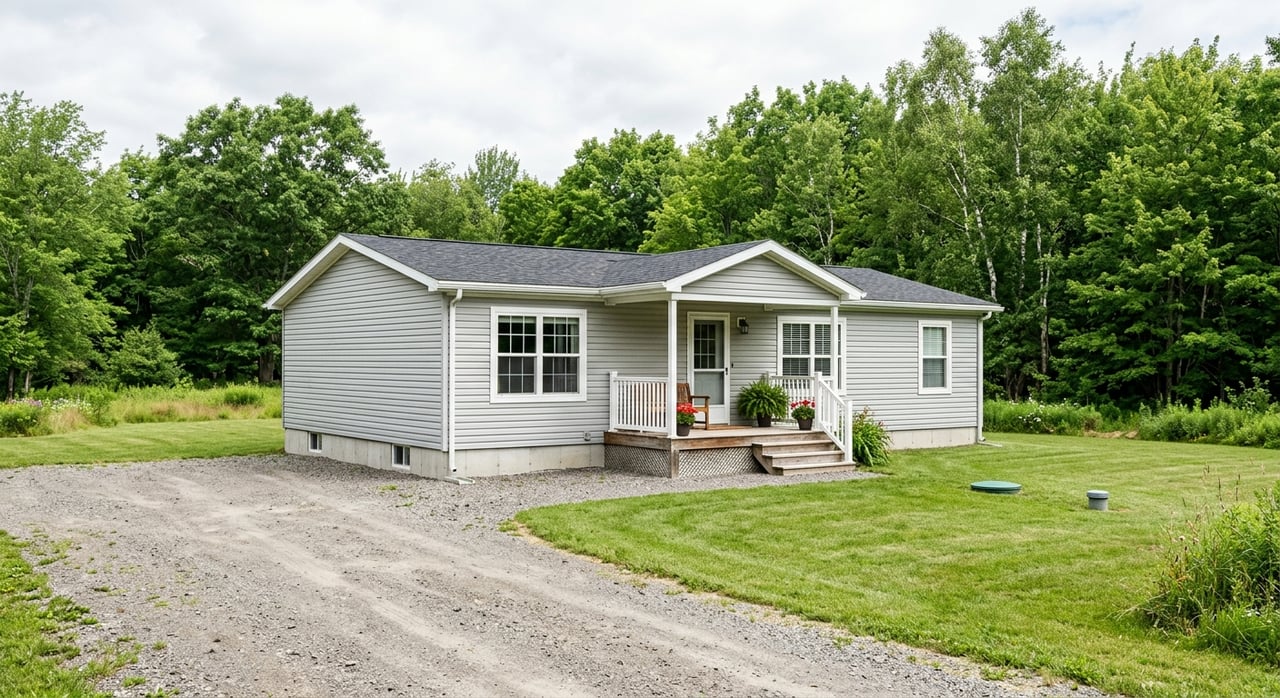
Thinking about buying land and putting a manufactured home on it in Mechanicsville? It can be a smart path to more space, more flexibility, and a lower upfront cost than some site-built options, but it also comes with a very different checklist. In this part of St. Mary’s County, the details that matter most often have less to do with the home itself and more to do with the land, utilities, permits, and title status. If you want to avoid expensive surprises, this guide will help you understand what to check before you buy. Let’s dive in.
Why Mechanicsville purchases need extra homework
In Mechanicsville, many buyers are looking at rural parcels rather than lots tied into public water and sewer. That means private wells and septic systems are often part of the equation, and those systems need to be evaluated early. Maryland Department of the Environment says private well owners are responsible for their own drinking water safety and should sample at least annually.
When you add a manufactured home to the mix, the purchase gets even more site-specific. HUD explains that installation depends on site preparation, access, stable soil, and utility hookups. In real life, that means you should evaluate the home, the lot, and the infrastructure together rather than treating them as separate decisions.
What counts as a manufactured home
A manufactured home is not just any factory-built home. HUD defines it as a factory-built dwelling unit with a permanent chassis, and homes built after June 15, 1976 must carry a HUD certification label. That label matters because it helps identify whether the home meets the federal construction standards that apply to manufactured housing.
In St. Mary’s County, you may also hear the term mobile home used in local rules. The county zoning ordinance uses that term for a HUD-certified manufactured structure with a permanent chassis. So if the paperwork, listing language, and local code seem to use different terms, that does not always mean they are talking about different things.
Check zoning before you make an offer
One of the biggest mistakes buyers make is assuming a vacant parcel can automatically be used for a manufactured home. In St. Mary’s County, permit approval is required for mobile homes, and the county says they must be installed according to the St. Mary’s County Building Code. The ordinance also requires crawlspace skirting to finished grade.
That means your installation plan is just as important as your sales contract. Before you move forward, confirm the parcel’s zoning district and whether there are any overlays or flood-related restrictions that could affect where or whether a home can be placed.
Some lots allow only temporary use
This is a big one for rural land buyers. The county zoning ordinance says mobile homes may be allowed in some rural zones only as a temporary residence during construction. In those cases, permit approval is required, and the home must be removed before a permanent certificate of occupancy is issued.
So if your plan is to buy raw land now and live in a manufactured home there long term, you need to verify that the parcel allows that use as a permanent setup. A rural address alone does not guarantee that result.
Make sure the lot is legally buildable
Before you fall in love with a parcel, confirm that it is a legal lot of record. St. Mary’s County says no permit may be issued unless a parcel or lot of record exists. The county also says that lots created by deed after March 15, 1978 without a proper subdivision plat generally must be recorded by plat before a building permit can be issued.
That is why land buyers should ask more than, “Can I buy it?” You also want to ask, “Can I get permits on it?” A parcel can be marketable for sale and still create problems if its legal status is not clear for future development.
Site plans need more than a boundary line
The county’s permit checklist asks for recorded easements, driveway location, limits of disturbance, and woods line. Those details affect where you can place the home, driveway, utility connections, and any future outbuildings. If you are planning a hobby farm setup or want room for a shop, barn, or detached storage, those placement details matter from day one.
Well and septic can shape the whole project
If the property will rely on private well and septic, expect Health Department review. St. Mary’s County says that when a property is served by a private well or septic system, the Health Department must review the proposal even if no plumbing is involved. For new dwellings on septic systems, the county provides drainfield specifications based on the square footage of living space before the site plan is prepared.
Maryland also requires a septic system construction permit for anyone installing or repairing a septic system. In practical terms, the size of the home, the location of the drainfield, and the site conditions all need to line up before your plan works.
Reserve areas matter too
Another detail many buyers overlook is the sewage reserve area. The county subdivision ordinance says new sewage reserve areas for proposed lots must be located within the lot served and may not be located within sensitive areas. This is not just a future problem to solve later. It is part of the lot review up front.
If a property does not have a workable reserve area, that can limit your options or stop the project entirely. That is why perc history, septic records, and reserve-area information should be part of your due diligence early in the process.
Floodplain and Critical Area issues can change everything
In St. Mary’s County, floodplain status is not a small detail. New mobile homes are prohibited in the coastal high hazard area and the floodway. In other floodplain zones, new, replacement, or substantially improved mobile homes must comply with county floodplain requirements.
The county also says permits are required for placement or replacement of manufactured homes in flood hazard areas. It uses FEMA flood maps and GIS layers to help determine whether a parcel falls in an A or V flood zone.
Critical Area review can affect site work
The county defines the Chesapeake Bay Critical Area as land within 1,000 feet of tidal water or wetlands. If your project involves vegetation removal, land disturbance, added impervious surface, or a new land use, that can trigger review. For buyers drawn to private, wooded, or water-influenced parcels, this is especially important.
A lot may look open enough on paper, but restrictions tied to environmental review can affect where you place a home, driveway, or accessory structure. It is much better to know that before ordering a home or clearing land.
Access, permits, and earthwork come first
A manufactured home cannot be installed if the site cannot support delivery and setup. HUD notes that site preparation and access are part of the installation picture. St. Mary’s County adds another layer by requiring permits for certain work in county rights-of-way.
If work is needed within a county right-of-way, a construction permit and bond may be required when a site is being developed without public road construction. Utility installation or trenching in a county right-of-way also requires a utility permit. The county says Miss Utility locates utilities within 48 hours after a request.
If your project disturbs more than 5,000 square feet, the Soil Conservation District must approve the site plan. So even before the home arrives, driveway work, grading, trenching, and utility access may all need their own approvals.
Financing depends on land and title status
Financing is one of the biggest differences between buying a site-built house and buying a manufactured home in Mechanicsville. HUD says its Title I program can finance the home, the lot, or both together. For a combined home-and-lot loan, the borrower must own the lot in fee simple, and the home may be classified as personal property or real estate.
That distinction matters. If the home remains titled as personal property, buyers are often steered toward chattel financing instead of a standard mortgage.
Why title classification matters
Consumer Financial Protection Bureau research from 2021 found that land ownership affects whether a manufactured home is titled as personal or real property. The same research found that chattel loans tend to have higher denial rates and higher interest rates than manufactured-home mortgages and site-built mortgages. CFPB also reported that about 42% of manufactured-home purchase loans were chattel loans.
HUD also notes that some lenders offer long-term real estate mortgages that require the home to be placed on an approved foundation. It says manufactured homes may also be eligible for FHA, VA, and USDA Rural Housing Services financing, depending on the setup and lender requirements.
Maryland title rules are part of the process
Maryland MVA says mobile homes must be titled in Maryland and may not require registration if they are not intended for highway use. MVA also says owners should contact the agency if the home has been permanently installed or converted to real property. The state provides forms for converting a manufactured home to real property and for severing it later.
That tells you something important: title status is not just paperwork. It can affect financing, future resale, and how the property is handled legally.
Flood insurance should come up early
If the parcel is in a Special Flood Hazard Area, financing can be affected before closing. St. Mary’s County says mandatory flood insurance purchase applies to federally related loans for buildings in these areas. The county also notes that lenders may require flood insurance even outside the mapped flood zone.
For buyers, that means flood mapping should be part of the lender conversation early, not something you wait to review at the end. Insurance cost can change your monthly budget just as much as taxes or interest rates.
Hobby farm plans need their own review
If your dream includes a small barn, equipment building, or agricultural outbuilding, check those rules before you buy. St. Mary’s County says a zoning permit is required for an agricultural building. Where a principal structure exists, a detached building must meet side and rear setbacks, stay out of the required front yard setback, remain at least 10 feet from septic systems or easements, and at least 15 feet from wells.
Recorded easements can also restrict placement. The county says some agricultural-building permits may be available on demand if there is no plumbing, the property is not in the Critical Area, and soil disturbance is 5,000 square feet or less.
A smart Mechanicsville buyer checklist
Here is a practical list to keep handy as you look at land and manufactured-home options in Mechanicsville:
- Confirm the exact zoning district and any overlays before making an offer.
- Verify that the parcel is a legal lot of record or has an approved subdivision plat.
- Ask for known perc approval, septic reserve area details, and any existing well or septic records.
- Check floodplain, Critical Area, and access issues before clearing land or ordering a home.
- Ask your lender early whether the home will be financed as real property or as chattel.
- Confirm whether title conversion will be required for your financing plan.
- If you want a hobby farm setup, verify outbuilding setbacks, well and septic clearances, and permit pathways.
Buying land and a manufactured home in Mechanicsville can absolutely work, but the smoothest transactions usually happen when you verify the site details before you commit. In Southern Maryland, a great opportunity is often hidden in the fine print, and that is exactly where I help buyers slow down, ask the right questions, and move forward with confidence. If you are exploring acreage, manufactured homes, or rural property in St. Mary’s County, connect with Samantha Bowling for a free consultation.
FAQs
What should you check before buying land in Mechanicsville, MD?
- You should confirm zoning, lot-of-record status, subdivision plat status, perc or septic information, floodplain location, Critical Area status, easements, driveway access, and any permit issues that could affect future development.
Can you put a manufactured home on any vacant lot in St. Mary’s County?
- No. St. Mary’s County requires permit approval, and some parcels may have zoning, floodplain, or temporary-use restrictions that affect whether a manufactured home can be placed there permanently.
Does a manufactured home in Maryland have to be titled?
- Yes. Maryland MVA says mobile homes must be titled in Maryland, and owners should contact MVA if the home has been permanently installed or converted to real property.
Why do well and septic matter when buying rural land in Mechanicsville?
- Many rural properties rely on private well and septic systems, and St. Mary’s County says Health Department review is required for proposals involving those systems. Septic design, reserve areas, and well placement can determine whether the site works for your plans.
How does financing differ for a manufactured home in Mechanicsville?
- Financing can depend on whether the home is treated as personal property or real estate. That can affect loan type, interest rate, consumer protections, and whether the home must be permanently affixed to owned land.
Do flood zones affect manufactured-home purchases in St. Mary’s County?
- Yes. New mobile homes are prohibited in the coastal high hazard area and floodway, and other flood hazard areas may require compliance with county floodplain rules, permits, and flood insurance tied to the loan.